
Glaucoma is one of the leading causes of blindness. It is silent, serious and can steal a person’s vision before they are aware of it.
Hattiesburg Eye Clinic specializes in the latest pharmaceuticals and minimally invasive surgeries for glaucoma patients with the only full-time Fellowship Trained Glaucoma Specialist in South Mississippi.
What Is Glaucoma?
Glaucoma is a progressive eye disease that can cause vision loss. Currently affecting around 2% of the U.S. population, glaucoma is the leading cause of blindness among African Americans and the third leading cause among Caucasians. Glaucoma in its various forms causes higher than normal intraocular pressure, created by the intraocular fluid (also known as aqueous humor) filling the inside of the eye. The body continuously produces this fluid essential to eye function and health, while the eye’s natural drainage system normally removes any excess fluid buildup at about an equal rate. If the eye’s natural drains become blocked, however, the buildup of excess fluid leads to an increase in pressure that could over time permanently damage the optic nerve.
Types Of Glaucoma
Open-Angle Glaucoma
This is the most common type of glaucoma, and is usually related to an inherited trait in which the eye’s drainage canals tend to become clogged. Patients with open angle glaucoma usually have little to no symptoms in the early stages of the disease. As it advances, though, a patient may begin noticing vision problems, beginning first with restricted sight in their peripheral or “side” field, a halo effect around bright lights, and a mild aching around the eyes.
Acute Angle Closure Glaucoma
This is caused by structural flaws within the eye (such as a shorter eye length that leaves less space between the iris and the drainage canal) or from the development of cataracts. In these cases, the iris or other structures can become pressed against a drain and block it off. Unlike open angle glaucoma, this type of glaucoma can result in a very rapid pressure increase that often causes severe pain.
In addition, there are secondary forms of glaucoma caused by other health conditions like diabetes or eye inflammation. Injury to the eye could also damage the natural drainage structures.
Diagnosis Of Glaucoma
Any glaucoma-related vision loss is permanent, so it’s critical to detect elevated intraocular pressure early and take measures to control it for the remainder of a person’s life. Although a patient may not know they have elevated eye pressure, an ophthalmologist or optometrist can perform a simple test during a regular eye exam to detect it.
We recommend everyone over the age of 40 undergo an annual eye exam not only for overall vision health but to detect elevated eye pressure if present. We also encourage exams at any age for patients at high risk for glaucoma, including those with diabetes, extreme near-sightedness, a family history of glaucoma, or who are of African descent.
Frequently Asked Questions About Glaucoma:
Managing glaucoma requires keeping intraocular pressure at a normal level for the rest of a patient’s life. The most common way and often the first treatment choice is with medicated drops a patient applies to their eyes daily. Depending on the active ingredients, these drops either help the eye drain excess fluid or decrease fluid production. Eye drops are non-invasive, easy to use and can effectively control pressure for many years.
Some patients, however, can develop allergies to the medication, or the drops become less effective over time, leading us to consider other procedures to lower eye pressure. One such common procedure is a trabeculectomy or filter surgery. During this procedure the surgeon removes tissue in the eye interfering with drainage, including part of the eye’s drainage system called the trabecular meshwork, to improve fluid removal. More recently we’ve seen the emergence of minimally (or micro) invasive glaucoma surgeries (MIGS).
This new group of procedures include microscopic surgical techniques and specialized medical devices (like iStent® (opens in new tab)) that help increase fluid drainage, while running a lower risk of scar tissue development than a traditional trabeculectomy. Another new procedure in glaucoma treatment is selective laser trabeculoplasty (SLT) in which an eye surgeon directs laser energy at the eye’s drainage system.
It is believed the quick beam stimulates the release of enzymes to that area of the eye that subsequently improves drainage and, if effective, can be repeated. At Hattiesburg Eye Clinic, we will assess your eye health and develop a personalized glaucoma treatment plan at our advanced eye care center in Hattiesburg, MS.
Glaucoma in most cases is a “silent” disease, especially at the onset. Most patients won’t notice any glaucoma symptoms (unless it’s a specialized form of the disease) until it reaches an advanced stage. An ophthalmologist or optometrist, however, can detect elevated pressure or other disease-related abnormalities during a routine eye examination. That’s why we recommend annual screenings for adult patients over 40, with a family history of glaucoma or who are of African descent.
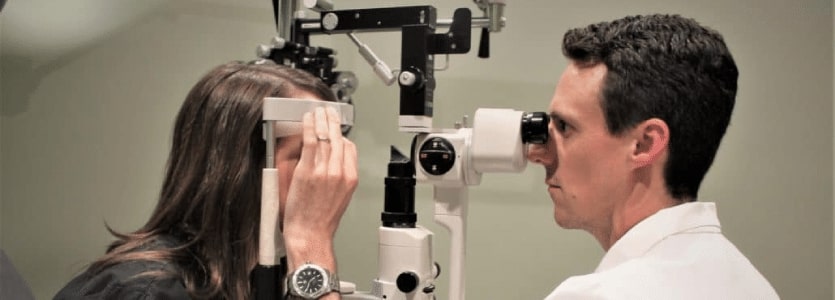
Glaucoma screening is a normal part of any routine eye exam. Besides assessing overall vision, the eye doctor will measure the level of intraocular pressure with specialized equipment. He or she may also view the optic nerve with an imaging device to assess its health or to detect any abnormalities.
Intraocular pressure is the pressure produced by the intraocular fluid within the eye. The eye creates and removes intraocular fluid normally at an equal rate. People with glaucoma, however, have a problem with removing excess fluid through their natural drainage system. This in turn causes the pressure to rise. Incidentally, it’s sometimes mistakenly equated with high blood pressure. But the two pressure measurements are separate and unrelated: in other words, you can have elevated intraocular pressure but not high blood pressure, and vice-versa.
We may consider other treatments if a patient can’t tolerate eye drops due to allergies or if the drops are no longer effective in reducing intraocular pressure. At that point we may assess a patient to see if they’re a good candidate for a laser procedure called selective laser trabeculoplasty (SLT), minimally invasive glaucoma surgery (MIGS) procedures, or filtration procedures like trabeculectomy (also known as a filter) or a tube shunt.
Selective Laser Trabeculoplasty (SLT) is a non-invasive procedure used to treat open angle glaucoma. We direct laser energy at the natural drain of the eye in order to rejuvenate the system. It can help lower intraocular pressure for up to a few years, and if effective can be repeated.
iStent is a medical device that’s part of the family of MIGS pressure-reducing procedures. In effect, iStent is a trabecular meshwork bypass stent that’s placed in the natural drain of the eye at the time of cataract surgery. About the size of a letter on a penny, the stent helps reduce intraocular pressure by allowing the fluid to bypass the dysfunctional natural drain.
DURYSTA™ is a new method for reducing elevated eye pressure (caused by open angle glaucoma) that replaces daily eyedrops. These tiny implants (smaller than the letter “I” in LIBERTY on a U.S. dime) are inserted into each eye by a trained physician during a minor procedure. The implants contain a powerful pressure-reducing drug that slowly releases into the eyes as the implant gradually dissolves. Patients can receive several months or possibly years of eyedrop-free pressure reduction. Click here to learn more about DURYSTA™ implants.
Our Patients Vouch For Us…
I always feel so relaxed and well taken care of every visit. Since I have glaucoma, I’m relieved that my eyes are tested thoroughly on every visit, and Dr Todd explains my results in detail. I can tell he really cares about his patients just as his dad Dr Stoney did before him.
Get In Touch With Us
To learn more about Hattiesburg Eye Clinic and our services please call us at (601) 268-5910 or toll-free at +1 (800) 624-8254 or schedule a consultation.


